©2000 The Media Mill Pty Ltd. The articles contained in this web page are copyright and may not be reproduced or transmitted without the permission of the copyright owner.
    Page 1
The essence of Granite Belt wine
by John Arlidge

It is time to revise the reputation of Queensland’s premier wine district; to isolate the unique flavours of Granite Belt wines that define them.

The Granite Belt’s mountainous terrain has been tortured by time. Grapevines love this country and its extremes. 

The district’s icy winters and dry, warm summers - alien to other parts of Queensland and anathema to most of the state’s vegetation – are kin to grapevines. Roots fairly leap through the decomposed granite that passes for soil. Their woody canes are resilient to harsh sun, blasting winds and frigid mornings. Even hail, which plagues the district in spring and summer, only temporarily depresses these hardy plants.

The fruit that the vines produce when properly established and maintained, make superb wines and there is a growing band of people who believe that the Granite Belt will, in time, become known as one of Australia’s most important wine regions.

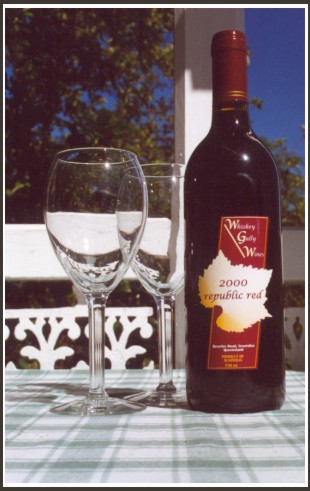
Above: A sample of the many Granite Belt labels


more


  Page 2
To an extent, the wine quality required to catalyse this change is already being produced at a number of Granite Belt wineries – perhaps as many as half of them. The district’s reputation, however, has yet to be revised by the wine consuming public.

Revising the Granite Belt’s reputation

That reputation which exists is a hangover from the days, 30 years ago, when Biltmore Cellars advertised “rough as guts” wines, made a virtue of adversity and encouraged an embryonic tourist trade from the passage of vehicles between Brisbane and Sydney via the New England Highway.

Some people – not connoisseurs, it should be said - found sport in delivering a bottle whose label proclaimed it the worst wine in the world, to set among the trendy Jacobs Creeks and Hardy’s Eden Valley Moselles adorning party tables in the seventies. It was cheap too.


What the labels did not tell you was that, in the main, the fruit used to produce the wine were unsaleable table grapes. It was a clever way to trade cast-offs which could not be sold at market.

From that questionable base, a fine industry emerged, personified by the Puglisi family of Ballandean.

They began, in like mind, turning otherwise unproductive fruit into wine, selling it in bulk to the guzzle and gag crowd.

In time, the wine trade promised to become more than a sideline and the Puglisi’s and others planted wine grapes to test the water. They upgraded wine-making equipment too.

Nevertheless, until the late 1980s the quality of the wine remained variable, due mainly to lack of experience, inappropriate viticultural (grape growing) techniques and a lack of investment capital.

more


  Page 3

Enter the professionals

When Ballandean Estate appointed its first professional winemaker, a graduate from South Australia’s Roseworthy College, Rodney Hooper, he allegedly observed that Angelo Puglisi ran his winery like a transport depot, shifting wine between barrels, vats and tanks with the finesse of a panel beater.

Since then, at Ballandean Estate and elsewhere, much has changed.

The quality of Angelo’s wines is now generally excellent and he has lost count of the number of medals they have won, particularly his renowned Sylvaner dessert wine, said by one respected commentator to be the best of its type in the world.

The three drivers of change have been an increasing desire by consumers for better quality 


wines, modern winery equipment and practices, and new viticultural techniques.

Having said that, the biggest selling wines on the Granite Belt remain sweeter white wines and Lambrusco style reds – nothing wrong with that, simply that people in the industry see more potential for elegance, power and complexity in the so-called “fine” or “premium” wines.

In the last five years, to produce premium wines has been the aspiration of most of the Granite Belt’s producers, as the area sets about securing its own appellation, in the mould of Coonawarra, Hunter Valley, Barossa etc.

In Australia, appellations are known as Geographical Indicators (GIs). The Granite Belt applied for its GI two years ago. It is expected to be granted by the Australian Wine and Brandy Corporation early in 2001 and it will define the geography and the geology of Granite Belt wines.
 

more


  Page 4

Newcomers establish Whiskey Gully Wines
My family and I came to the district three years ago. We purchased an historic station property, Beverley, at Severnlea; set up a restaurant and accommodation cottages; planted our first vines; and, registered the name Whiskey Gully Wines.

Considerable research went into preparing and planting the vines to ensure that we would maximise the quality of the fruit they produced.


It has been an enchanting journey. We have now completed our second vintage and, thus far, the results have met our high expectations. But, one vital factor has eluded me – an adequate definition of what makes good Granite Belt wines what they are.

Since we have not yet produced sufficient quantities to exhibit our own wines in shows, I have had to be content to observe how other Granite Belt wines are judged by the industry.

I have observed and read the comments of several eminent wine judges about the district’s products. All the time I have been waiting for someone to adequately describe the distinctive regional character that I taste in our wines.

To my knowledge, nobody ever has.

more


  Page 5

The Granite Belt character
Queensland-based Master of Wine, Andrew Corrigan, has said learned things about Granite Belt wines, but he has never encapsulated their character.

I, with others, laughed when the chief judge of the Courier Mail-Sheraton Awards, reportedly described unwooded chardonnays from here and elsewhere as “baby vomit”, but this was a comment on a particular variety and treatment, not on regional character.

I asked my winemaker, Philippa Hambleton, to consider the question and, together, we have tried to define what that character is.

For a start, Granite Belt wines tend not to be huge and bold like wines from some other Australian wine regions. Rather, they are lighter and more elegant – more French in their style, in fact.


A number of Granite Belt winemakers have tried to produce heavier wines, particularly reds, by either not filtering or by lightly filtering the wine. From a technical point of view that works but the results are not to my taste, often producing a rather furry wine and a large crust in the bottle.

My own inclination is to accept that the reds wish to be, by and large, elegant, medium to full bodied wines and to work with that trait.


Connecting with the landscape
By coincidence or otherwise, the underlying flavours of Granite Belt wines seem to connect with the bouldery landscape and the climate. The land possesses delicate, temperate beauty while underneath it is resilient and strong. The wines are a bit like that.

The flavours of individual varieties generally follow classical patterns, but there is an underlying regional influence. 
 

more


  Page 6
We think that fundamental character, unique to the region, is a collection of soft mineral tones that linger between the nose and mid-palate. The best metaphor I can think of is the resonance of a chord plucked on a classical guitar.

I put this view to Tony Comino, who has been making wine in the region for more than 20 years. He strongly disagreed with the description, believing the fundamental character to be warmer and less biting than the word “mineral” would suggest. He was, however, unable to offer an alternative. 

White wines of the region are refined, elegant and have crisp acidity. As Philippa Hambleton says, “they are an excellent framework on which to hang (winemaking) techniques.”

Red wines typically display bold fruit flavours. “They show leafiness in early stages of ripeness and, subsequently, cherry then blackberry flavours,” Philippa observes.


In cooler years, shiraz grapes produce allspice and black pepper flavours. In Cabernets and Merlots, soft mint and plum pudding are often detected.

As long as growers don’t overcrop vines, the reds make superb, early drinking wines (three to five years cellaring) with an excellent balance of flavours.


Recognition for the region
A recent industry survey sampled wine grapes from around Australia. To the surprise of many – but not Granite Belt producers – the report identified two Granite Belt varieties, semillon and shiraz – as having the highest flavour levels of their varieties using a glycosidal assay test.

This brilliant character is accounted for by the cool climate which slows berry ripening and allows the flavour to fully develop. 
 

more


  Page 7
This quality has not, to date, been consistently reflected in medals for the wines of the region, although, notably, Jeff Harden’s Bungawarra 2000 Thomas Semillon scored the highest mark (51) and a silver medal at the 2000 Courier Mail-Sheraton Awards. 

Observing and reading the commentary of wine judges, one gets the impression that the Granite Belt character is not well understood; that it is an obstacle to their expectations of the varieties they are tasting.

It reminds me rather of the way in which Coonawarra wines languished in obscurity until, in the seventies, commentators realised that the region’s flavours, while different from classical definitions, were excellent in their own right.

And who can forget Mudgee Mud – originally applied derisively to beer made in the area, now a sought after quality in wines from that region.


Whiskey Gully Wines in a regional context
Two of the wines that we have produced this year at Whiskey Gully Wines, a chardonnay and a shiraz, have qualities which, according to Philippa Hambleton, achieve the full potential of Granite Belt wines.


more


  Page 8
Immediately prior to harvest we got a little sweet botrytis, otherwise known as noble rot, in the chardonnay paddock. It was not there long enough to do any damage, as uncontrolled botrytis can, rather it elevated sugar levels and added complex marmalade tones to the flavour. 

The resulting wine (2000 Beverley Chardonnay) has a long, buttery palate and the guitar chord mineral tones interplay beautifully with the peach flavours one might expect from a chardonnay plus the less expected marmalade. The whole is well balanced by dusty oak. The tight acid finish is clean, generous and lingering.

The vintage was split evenly between new French and American oak (at huge expense to the management!) and then blended back. The wine is in the bottle but not yet released.

The 2000 vintage shiraz is still in the barrel (new American oak) and will not be bottled until May. The barrel samples are dry and earthy. There is huge fruit present and a wonderful allspice 


undertone imparts great complexity. God willing, it will be an elegant beauty.

What will the judges think?
It is always dangerous speculating on what wines judges may think. 

Both of these wines will be tested at wine shows in 2001 and it is my fervent hope that they will be received for what they are and their Granite Belt character noted for what it is, not as an irrelevance to be ignored in the scoring process.

There is great faith within the Granite Belt community that this region’s wines will make their mark. Growing techniques are in place, winemaking skills have been acquired and there is commitment to the task.

Recognition will come with patience, education and understanding. 
 

more


  Page 9
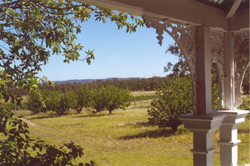
Apricot trees and the vineyard beyond from the verandah of Beverley Vineyard Restaurant and Whiskey Gully Wines. 
Return to menu
The past three years have been an enriching experience. I heartily recommend the lifestyle to anyone similarly obsessed with transforming sunlight and soil into the most wonderful elixir, of which the Romans truly wrote: in vino veritas – in wine the truth.

* * * *


©2000 The Media Mill Pty Ltd. The articles contained on this web page are copyright and may not be
reproduced or transmitted without the permission of the copyright owner.

Article prepared for Brisbane's
Courier Mail Newspaper
in October, 2000

By John Arlidge
Like the French and Italian countryside, Queensland’s Granite Belt, in spring, has a powerfully rustic flavour, given as much to smell and taste as any visual impacts.

Old men with creaky limbs loft metal boules; an occasional tractor weaves along a back road; and, everywhere, intense green shoots on the grapevines leap to life along neatly pruned trellises.

It is by no means an un-Australian experience, for the surrounding bush and mountains have gum leaf familiarity, yet it is, for the first time visitor, both unexpected and delightful.

The Granite Belt Spring Wine Festival, to be held during the first three weekends of October, artfully plays on these attributes and the region’s rich cultural diversity.

This year there are to be 23 major events at 17 different wineries where visitors will be able to do everything from disgorging and bottling their own sparkling wine, to playing badminton by the lake.

Notable food-related attractions are Bungawarra Wines Blues Bash, featuring the blues/folk band “Spot the Dog”, and a six course candlelight dinner at Severn Brae, which matches their own wines with regional foods.

David Zanatta, whose family established the region’s first commercial winery 33 years ago, is holding a riotous Caveman Banquet at Old Caves Winery, while Heritage Wines promise a formal “Fine Wine and Gourmet Dinner”, introduced by their winemaker, James Barnes.

There are many more attractions detailed in the festival brochure.

Festival co-ordinator, Tony Comino, says growth in tourism to the region over the past five years, driven by serious investment in vineyards and wineries, will ensure that this festival is the biggest and best yet.

“Spring is a great up here,” Tony observes.

“There’s lots of work in the vineyard at this time of year and we all need to take a break and have a bit of fun, come October. That’s what the festival is all about – having fun.”

Tony is typical of the region’s winemakers, softly spoken, friendly and informative.

Despite the growth in the wine industry in recent years, most operators are hands on folk who work daily in the vineyards and wineries.

It remains one of the Granite Belt’s great attractions to rub shoulders with such people, learning what it takes to nurture vines and make good wine.

The atmosphere is charming with few, if any, hints of the commercialism that dogs many tourist spots.

Along with new vineyards have come accommodation and other attractions for visitors.

There are now over 100 B&Bs and cottages people can choose from, in addition to motels and backpacker-style digs.

Warwick and Tenterfield, both about 40 minutes by road from Stanthorpe, are expected to cater for any overflow during the festival. However, accommodation will be at a premium so it is advisable to book early.

Motel accommodation will typically cost between $50 and $70 per person per night, while some of the more luxurious vineyard resorts will set you back up to $260 per night for a two bedroom cottage.

Some accommodation venues offer special Spring Wine Festival packages.

Come October, Brisbane will be hot enough to make many of us dream of the Granite Belt’s mountain air. So, if you are after a cool and exciting weekend break, then the Spring Wine Festival offers that in abundance.

Be warned, however: take your jumper and woolie jimjams. Cool days often become cold nights up in the mountains.

FACTS
Dates: 3 weekends from September 30 to October 15
Brochures and information: Festival Info Line 4683 6222
Accommodation website: www.halenet.com.au/~tourism
Travel time: 2 ¾ hours from Brisbane

Return to menu